
What does it take to win tenders in 2025, when AI-driven evaluations, e-tendering, and paperless systems are reshaping procurement? For contractors, suppliers, and procurement teams, mastering the stages of tender process step by step is not just useful—it’s essential for winning projects and staying compliant in a competitive global market.
This guide will break down the 7 stages of tendering, explain why they matter, highlight common challenges, and share best practices to succeed in 2025.
What is the Tender Process?
The tender process is the structured procedure organizations use to invite bids, evaluate potential suppliers, and award contracts for goods, services, or construction projects. In both public and private sectors, it provides a fair and transparent framework for selecting the best supplier. In 2025, tendering matters more than ever. It ensures fair competition by opening projects to qualified suppliers worldwide.
It promotes transparency, reducing favoritism and corruption. It also drives cost efficiency, ensuring organizations receive the best value without sacrificing quality. Importantly, the process builds accountability through clear documentation and compliance with legal standards.
Why Understanding Tender Stages is Important in 2025
Both clients and suppliers benefit from understanding each stage of the tender process. For suppliers, knowledge of the steps helps in preparing stronger, more targeted bids that stand out from the competition. For clients, following the stages precisely ensures compliance with procurement regulations and avoids disputes later. Technology is also changing the game. Digital platforms and AI tools save time by automating tasks that once took weeks, from publishing tenders to evaluating bids.
When both sides understand how the process flows, it not only reduces errors but also strengthens trust. In today’s regulated environment, mastering these steps is a competitive advantage.
The 7 Stages of Tender Process in 2025
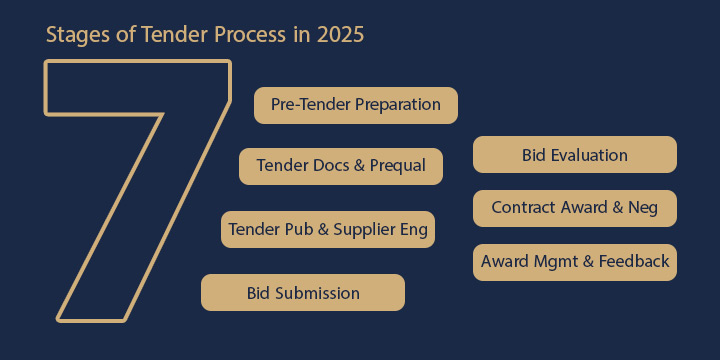
Let’s now walk through the seven stages of the tender process, looking at how each step works in modern procurement and construction projects.
Stage 1 – Pre-Tender Preparation
Every tender begins with careful preparation. At this stage, the client conducts market research to understand supplier availability and pricing trends. They also define the scope of the project, identifying goals, deliverables, and timelines. Budgeting plays a critical role here, as realistic financial planning helps avoid issues later. Another important decision is selecting the type of tender.
Open tenders allow anyone to apply, selective tenders restrict bidding to a shortlist of qualified suppliers, and negotiated tenders involve direct discussions with chosen parties. In construction, this stage is often called the pre-tender stage, where feasibility studies and project outlines are finalized.
Stage 2 – Tender Documentation & Prequalification
Once the groundwork is complete, the client prepares the necessary documents. These include the Invitation to Tender (ITT), Request for Proposal (RFP), Bill of Quantities (BOQ), and detailed technical specifications. Alongside documentation, a prequalification process may be carried out to filter suppliers. Here, contractors are assessed on their financial stability, technical expertise, and past project performance.
These stages of tender process in procurement are crucial for both suppliers and clients to follow to ensure compliance and efficiency
Stage 3 – Tender Publication & Supplier Engagement
With documents ready, the tender is announced. Unlike the past, when advertisements were published in newspapers, most tenders in 2025 are launched on digital procurement portals and government websites. Many organizations also rely on AI-powered notifications to alert pre-registered suppliers about relevant opportunities.
During this phase, suppliers can ask questions and request clarifications. Open communication helps avoid confusion later and ensures that bids reflect the client’s true requirements.
Stage 4 – Bid Submission
Suppliers then prepare and submit their proposals. Today, this process is almost entirely digital, managed through secure online platforms. To be successful, suppliers must carefully follow submission guidelines. Missing a single document, submitting late, or failing to meet compliance rules can result in immediate disqualification.
The tender preparation and submission stage is critical—it’s often the deciding factor in whether a supplier’s bid is even considered. Thoroughness and attention to detail here cannot be overstated.
Stage 5 – Bid Evaluation
Once submissions close, the evaluation stage begins. Clients examine each bid through two lenses: technical merit and financial competitiveness. Technical evaluations focus on factors such as methodology, quality standards, and team expertise. Financial assessments look at overall pricing, value for money, and payment terms.
In 2025, many organizations are using AI-assisted evaluation systems. These tools reduce bias, speed up scoring, and ensure a fairer assessment of all bids. For suppliers, this means accuracy and compliance carry even more weight than before.
Stage 6 – Contract Award & Negotiation
The winning bidder is notified during this stage. Before the contract is finalized, negotiations may take place to fine-tune pricing, timelines, and delivery terms. Once both sides agree, the contract is signed and the project can officially begin.
This stage is about alignment. It ensures that the client and supplier have the same expectations and are committed to fulfilling their obligations.
Stage 7 – Post-Award Management & Feedback
Tendering does not end with the signing of a contract. In fact, the post-tender stage in construction is just as important as the earlier ones. Here, the client monitors supplier performance, checks compliance with agreed terms, and evaluates whether objectives are being met. Feedback is also crucial. Lessons learned from completed tenders help organizations improve future processes, while suppliers can use feedback to strengthen future bids.
Companies that invest in strong post-award management build long-lasting supplier relationships and improve efficiency over time.
Common Challenges in Tendering and How to Overcome Them
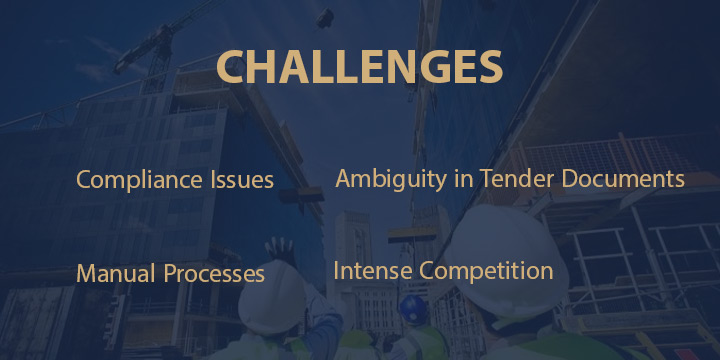
- Compliance Issues
Missed mandatory documents or errors in forms can disqualify bids.
Solution: Use digital tender management tools to auto-check compliance and reduce human error. - Ambiguity in Tender Documents
Vague requirements often lead to misunderstandings and disputes later.
Solution: Clear documentation, standardized templates, and supplier Q&A sessions can prevent confusion. - Manual Processes
Paper-based tendering slows down procurement cycles, sometimes taking months.
Solution: Automating workflows with e-tendering platforms saves time and streamlines evaluation. - Intense Competition
Even strong bids may lose to better-positioned or more experienced suppliers.
Solution: Supplier training, market research, and AI-driven bid analysis help improve chances of success.
Best Practices for Winning Tenders in 2025
Success in tendering is not only about low prices. To win contracts in 2025, suppliers should focus on several best practices. Preparing clear and compliant documentation is the first step—every detail must align with the client’s requirements. Highlighting unique value, whether through innovation, efficiency, or sustainability, also helps bids stand out.
Conclusion
This also concludes the importance of the tender process because it’s evolving in 2025. The shift toward AI-driven evaluations, blockchain-based e-contracts, and paperless systems shows how the industry is moving toward greater efficiency and transparency. For suppliers and contractors, mastering the 7 stages of the tender process step by step is no longer optional; it’s the foundation of business growth.
By adopting best practices, embracing technology, and committing to continuous improvement, organizations can secure more contracts and build lasting reputations.
Simplify your tender process in 2025 with CESOL – win contracts with ease!
FAQs
The seven stages are: Pre-tender preparation, Tender documentation, Publication, Bid submission, Evaluation, Contract award, and Post-award management.
Tender documentation includes all necessary documents, such as ITT, RFP, and BOQ—that outline project requirements and guide suppliers in preparing their bids.
Procurement is the full process of acquiring goods and services, while tendering refers specifically to the competitive bidding stage.
AI automates bid evaluation, eliminates bias, verifies compliance, and reduces processing times, making the entire system more transparent and efficient.
E-tendering refers to the digital submission and management of tenders via secure online platforms, replacing traditional paper-based systems.