
Moving into a new house seems like a new start, however, one unpleasant discovery that many new homeowners get to know is that the final bill is never what they thought. The budget can quietly be inflated with hidden costs, complexity of the sites and design adjustments. Learning these at an early age can make an investment in stressful situations a sure thing. Many homeowners discover that the costs of building a house extend far beyond what was outlined in their initial quote.
So if you have ever wondered why your build quote doesn’t match your final invoice — it’s usually because of these hidden and variable costs.
From site costs and council fees to utility connections and interior finishes, these hidden expenses can quietly inflate your budget by tens of thousands. Understanding these factors before you begin construction can save you both stress and money — and help you build smarter from the ground up.
This blog explores the most common hidden costs of building a home, what’s not included in a new home price, and how you can get a clear, accurate estimate before you even lay the first brick.
Why Your Build Quote Doesn’t Tell the Whole Story
All quotes contain assumptions regarding soil, slope, permits, and even distance of suppliers. Rules and terrain can easily work against the figures in places such as the NSW and Brisbane. This is why it is extremely important at the very beginning of the project to carry out the professional cost estimation and ensure clear communication with the builders.
That’s because building house costs are influenced by multiple factors including:
- Land slope and soil quality
- Local council regulations
- Accessibility and distance from suppliers
- Upgrades and customizations
- Construction delays and design variations
Every block of land and home design brings its own set of challenges. For example, house construction costs in NSW can differ significantly from those in Brisbane due to terrain, compliance rules, and even climate conditions.
Hidden Costs Homeowners Commonly Overlook
1. Site Costs — The Hidden Foundation of Your Budget
One of the most underestimated expenses for building a house is site preparation. Before the foundation is even poured, the land must be tested, leveled, and made suitable for construction.
Site costs can include:
- Soil testing and contour surveys
- Excavation and leveling
- Drainage solutions and retaining walls
- Tree removal or rock excavation
If your land is sloped or contains clay or rocky soil, the price can rise sharply. It’s not uncommon for site costs to exceed $10,000–$30,000, especially in areas with challenging terrain.
Always ask your builder for a detailed site cost breakdown — not just an estimate — so you know exactly what’s covered and what’s not.
2. Council Fees, Permits, and Approvals
Before you begin construction, you’ll need various council approvals — including planning, building, and inspection permits.
Depending on your region, these can add thousands to your costs of building a house.
For example, house construction costs NSW can include:
- Development application fees
- Construction certificates
- Compliance inspections
- Storm water or environmental levies
Some builders include these in the initial quote; others don’t. Make sure to clarify this upfront to avoid unpleasant surprises down the line.
3. Design and Engineering Adjustments
Once site assessments are done, you might need engineering modifications to accommodate your land or structural requirements. These adjustments can affect your building house costs significantly.
Examples include:
- Reinforcing the slab for reactive soil
- Adjusting roof pitch or window placements
- Adding structural beams for open layouts
Design revisions also incur variation fees, which builders charge whenever you alter the original plan. To stay safe, budget at least 5–10% of your total cost for unforeseen design changes.
4. Utility Connections and Essential Services
Your house won’t be livable without connections to water, gas, and electricity — but these services aren’t always included in your quote.
If you’re building in a new estate or rural area, expect additional expenses for building a house like:
- Electrical grid connection or transformer setup
- Water and sewerage connections
- Gas line installations
- NBN or internet connection fees
These can easily add several thousand dollars to your cost to build on to a house, particularly if your plot is far from the main lines.
5. Landscaping, Driveways, and Fencing
Many homeowners don’t realize their “new home price” covers only what’s inside the walls — not the outdoor finishes.
Landscaping, fencing, driveways, and pathways are often excluded from base contracts. These additions, while optional in the builder’s eyes, are essential for functionality and curb appeal.
Average costs in Australia:
- Driveways: $5,000–$10,000
- Landscaping: $10,000–$20,000
- Fencing and gates: $3,000–$6,000
If you’re signing up for house and land packages, be sure to check for hidden costs in the inclusions list — as many “turnkey” deals still leave out exterior work.
6. Flooring, Lighting, and Window Treatments
The home you see in a builder’s quote display village looks polished and complete — but the version you get at the quoted price might not.
Display homes often feature upgraded finishes such as:
- Premium flooring (timber, tiles, or hybrid planks)
- Designer light fixtures and ceiling fans
- Blinds, curtains, and fly screens
However, most base contracts include only basic Flooring and lighting options. So, when comparing builders, ask clearly what’s not included in a new home price and request a list of upgrade costs.
These add-ons are among the biggest hidden costs of buying a home if you’re building from scratch.
7. Terrain and Access-Related Costs
Difficult land access is one of the least-discussed budget blowers. If your land is on a slope, in a tight street, or far from main roads, expect additional building house costs for:
- Machinery hire (cranes or specialized trucks)
- Material delivery delays
- Extra labor for hard-to-reach sites
Builders sometimes charge “site access” or “traffic management” fees when working in narrow or steep areas. If your block isn’t flat and open, clarify these costs upfront.
8. Variation Fees and Time Delays
Even with perfect planning, variations happen — and they’re rarely free. Whether you change a window style or add a power point, builders charge administrative and labor costs for every adjustment.
Weather delays, supply shortages, or permit hold-ups can also increase building a new home costs. Extended timelines may result in higher rental expenses or loan interest if you’re paying a mortgage during construction.
To protect your budget, ensure your contract defines variation terms and compensation for delays.
9. House and Land Packages Hidden Costs
House and land packages are marketed as “stress-free solutions,” but they often conceal extra costs beneath the surface.
Common house and land package hidden costs include:
- Site preparation or leveling not included
- Driveways, landscaping, and fencing excluded
- Facade upgrades charged separately
- Additional council or connection fees
Always request a comprehensive inclusions list. What’s advertised as a fixed-price package can quickly become flexible — and expensive — once upgrades begin.
10. Moving and Post-Construction Costs
Once your home is complete, there are still finishing touches and moving costs to handle.
These may include:
- New furniture and appliances
- Curtains, blinds, and décor
- Driveway sealing or outdoor lighting
- Moving truck or storage fees
These final expenses often go unbudgeted but can easily total thousands. To avoid financial stress, plan a final 5–10% buffer to cover post-build needs.
What’s Not Included in a New Home Price?
Understanding what’s not included in a new home price is essential to avoid being blindsided later.
Here’s a list of common exclusions:
- Site costs and soil tests
- Landscaping and fencing
- Floor coverings and lighting upgrades
- Window coverings
- Air conditioning and ceiling fans
- Utility connections
- Council permits and compliance fees
Builders often promote “base prices,” which cover only structural essentials. For a truly move-in-ready experience, ask for a turnkey price — which includes all fixtures, finishes, and external works.
Regional Example: NSW and Brisbane
If you are in NSW New South Wales, expect higher costs due to strict building codes and additional certifications. For instance, fire-prone or flood-risk areas require specialized materials and engineering compliance. These can raise your cost of building a home significantly.
Meanwhile, in Brisbane, site costs are often a key concern due to variable soil conditions and flood zones. The question “how much to build a house in Brisbane?” doesn’t have a one-size-fits-all answer — because terrain and climate directly affect your budget.
Understanding these regional factors early can help you prepare accurate cost projections.
How to Accurately Estimate the Costs of Building a House
If you want to build confidently without budget shocks, professional cost forecasting is the key.
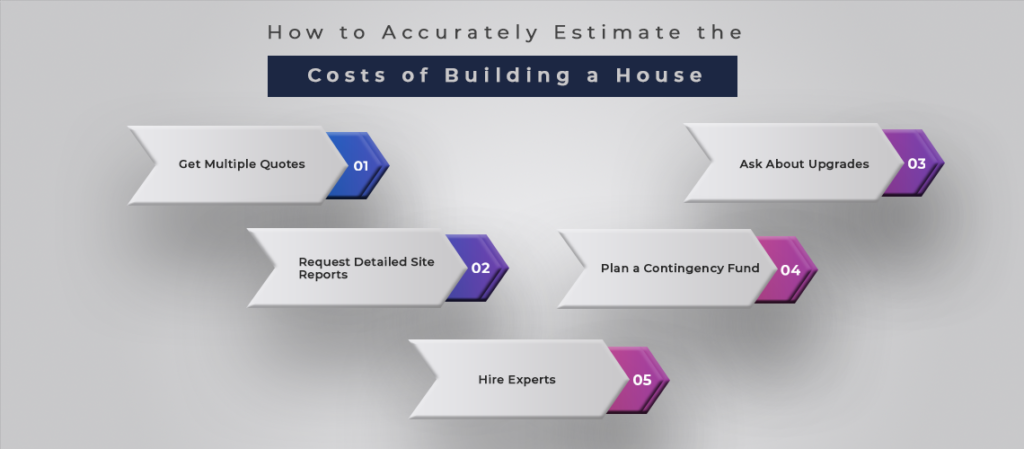
Here’s how to start:
- Get Multiple Quotes: Compare builder inclusions and clarify exclusions.
- Request Detailed Site Reports: Soil and slope tests will uncover early costs.
- Ask About Upgrades: Flooring, lighting, and landscaping often add up.
- Plan a Contingency Fund: Keep at least 10% aside for unexpected costs.
- Hire Experts: Professionals made the task much more easy and money buy guarantee.
To be accurate and have the calm of mind, invest in Construction estimating services. Professional estimators examine all the elements of your project including materials and labor to land preparation and utilities so that your budget is based on reality and not guesswork. Homeowners can save unnecessary costs and feel confident about the budget they have as they will not have any hidden costs by hiring the services of a reputable construction estimating companies.
Quick Checklist for Hidden Costs
✔️ Site preparation and excavation
✔️ Council permits and compliance inspections
✔️ Utility connections (water, power, gas)
✔️ Landscaping for Driveways and fencing
✔️ Flooring, lighting, and blinds
✔️ Variation and delay fees
✔️ House and land package extras
✔️ Post-build furnishings and moving costs
Avoiding Budget Shock
To ensure your finances are streamlined:
- Ask early and clear quotes and soil reports.
- Request builders to highlight written omitted costs.
- Outsource a construction cost estimator, who would go through plans and sign.
To have a more in-depth analysis of the regional prices and undisclosed details, visit the full report regarding the real prices to construct a house.
Get the right contraction estimator or contractor — it includes state-by-state statistics, cost books and tips on expert estimating.
Budget overruns do not necessarily have to kill your dream build. The clearer the start the easier the construction process would be. You can save a lot more than you will spend by investing some little time in planning, or by paying a small sum in professional estimating.
Final Thoughts: Time to cut the costs and build your dream house today!
Home construction must be a rewarding experience – not an expensive endeavor. Knowing the real expenses of house construction, you will plan with no doubts, take correct decisions and do not face unpleasant financial surprises. Site costs and council approvals to nondisclosed design fees and landscaping, it is your awakened awareness that will serve as your best defense against budget blowouts. Also, other inclusions should be thoroughly examined before signing any contract, and clarified cost breakdowns should be requested, and it is advisable to hire professionals to guide you on proper budgeting.
Want to start your project with clarity? Explore expert construction estimation services on our website cesol and get a realistic, itemized cost breakdown before you build. It’s the smartest way to turn your dream home into reality — without overspending.
FAQs:
The actual prices to construct a house in Australia may vary between 1800 and 3000 Australian Dollars per square meter, which will depend on aspects such as complexity of design, slope of the land, materials and the location. This estimate does not normally include site costs, landscaping, and utility connections that may increase your budget by 1020 percent.
Site preparation, council fees, soil testing, landscaping, installation of the driveway and utility connections are some of the most typical hidden costs of constructing a new house. Most constructors do not include them in the initial construction cost and therefore it is important to read your contract thoroughly before signing the contract.
Usually add-ons in a new home cost are such things as fences, driveways, curtains, flooring, and lighting and landscaping. Contractors are always ready to offer a lower price, which includes structural elements only – all the other items are excluded as extras or upgrades.
To ensure that there is reduced building surprises, begin with in-depth budgeting and professional cost estimation services. Assists you in determining the costs of the potential sites, material variances, and upgrades on the design, and when you come to the construction phase, you are less likely to have financial surprises.
House and land packages concealed the charges typically happen since the price stated in the advertisement pertains to the construction of the basic home. Other driveway and fencing fees, along with the soil leveling, retaining walls and council approvals may add a lot of money to the overall cost. Always insist on a turnkey quote to get to know the actual final price.