
The cost of construction materials in Australia has been rising year after year, putting pressure on both homeowners and builders. Every project, big or small, now requires sharper budgeting and smarter choices. While many people immediately look for discount home materials or the cheapest building material available, the truth is that short-term savings can lead to higher costs later. A bargain product might look good upfront, but could fail early, forcing expensive replacements or constant maintenance.
The smarter approach is to think beyond price tags. Real savings come from balancing cost, durability, and compliance—ensuring your project stays within budget today while avoiding costly headaches tomorrow.
The Real Cost of Building Supplies: Why Discounts Alone Don’t Work
There’s a big difference between a “low price” and “real value.” Too often, people purchase discount materials thinking they’ve found a smart deal. But if those supplies don’t meet Australian standards or wear out quickly, the cost of construction materials doubles when you factor in repairs and replacements.
Picture this: you buy a cheaper roofing sheet that rusts within five years instead of lasting two decades. It may save money at the start, but you’ll end up paying twice for the same job.
Here’s a simple comparison:
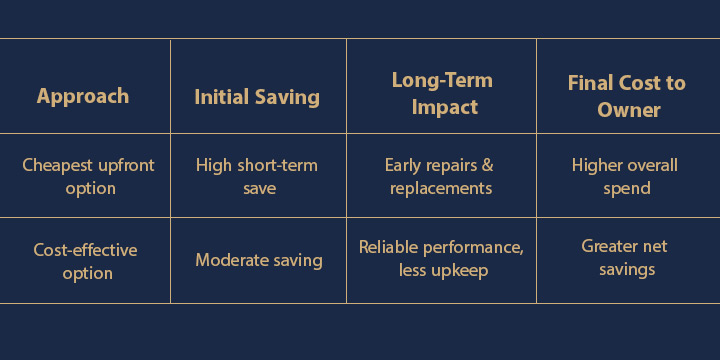
The message is clear: cost effective building materials may cost a little more at purchase, but they deliver far more savings in the long run.
Choosing Materials That Deliver Real Value
When budgets are stretched, it’s natural to search for affordable building materials for homes. The goal, however, is not just to find something cheap but to select materials that perform well throughout the building’s life. Durability, energy efficiency, and compliance all play key roles in stretching your budget.
Take insulation as an example. A slightly higher upfront cost can cut heating and cooling bills by 15% annually while extending the lifespan of your HVAC system. Similarly, concrete enhanced with fly ash or engineered timber reduces maintenance needs and lasts longer. These are not just “budget options”—they are smart, budget-friendly construction materials that protect your wallet well beyond the build.
Smart Ways to Source Discount Home Building Supplies
Buying materials the right way can be just as important as choosing the right product. Many people focus only on retail outlets without realising there are better supply channels. Working with reliable construction material distributors or wholesale suppliers opens up access to discount home building supplies that still meet Australian compliance standards.
It’s important to understand that not all suppliers offer the same value. Some provide bulk purchase discounts, others specialise in recycled or surplus stock. Mixing supply sources often delivers the best results.
Here are some practical strategies:
- Work with local distributors – Build relationships for better pricing and reliable supply.
- Negotiate bulk contracts – Lock in costs early and avoid price fluctuations.
- Check surplus warehouses – Discontinued stock can often be bought at deep discounts.
- Explore regional wholesale markets – Many regional suppliers offer lower rates than city retailers.
This mix of sourcing helps you secure discount home materials while keeping quality and compliance intact.
Budget-Friendly Options: What Are the Cheapest Building Materials?
Some low cost construction materials really do provide genuine savings without reducing quality. In Australia, builders are increasingly turning to a mix of traditional and sustainable products that reduce both upfront and long-term costs.
| Material | Why It’s Affordable | Long-Term Value | Best Use Cases |
| Bamboo | Fast-growing, low harvest | Renewable, flexible | Flooring, wall finishes |
| Fly Ash Concrete | Industrial byproduct | Stronger, fewer cracks | Foundations, slabs |
| Recycled Steel | Made from existing supply | Durable, eco-friendly | Frames, roofing |
| Engineered Timber | Efficient production | Lightweight yet strong | Walls, mid-rise housing |
Selecting the cheapest building material isn’t about the lowest sticker price—it’s about finding budget-friendly construction materials that offer both strength and affordability.
Tips to Save Money on Building Supplies Without Risking Quality
Even when you choose cost-effective building materials, the way you manage your purchases plays a big role in keeping costs under control. Builders often get caught up in chasing the lowest quote, only to be surprised by hidden charges, late deliveries, or sudden price increases.
Here are some proven tips to save money on building supplies:
- Negotiate beyond price – Payment terms, delivery schedules, and order volumes often save more than just a unit discount.
- Use Vendor Managed Inventory (VMI) – Suppliers track and restock your materials, lowering storage costs.
- Be cautious with Just-In-Time – While JIT reduces storage, one delay can bring expensive project downtime.
- Buy off-season – Prices for common materials often drop when demand slows.
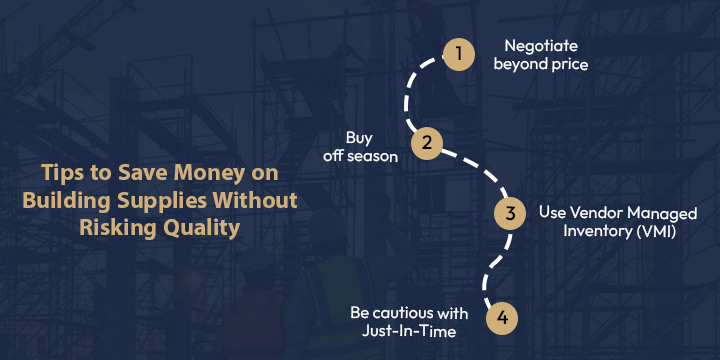
Each of these strategies directly affects the cost of construction materials and helps avoid unnecessary financial risks.
Using Technology to Cut Waste and Control Costs
Technology is changing how Australians save money on building projects. Instead of relying on manual calculations that often lead to over-ordering, digital tools now make it possible to buy exactly what’s needed.
- BIM (Building Information Modelling): Produces precise quantity take-offs, preventing waste.
- Cutting and nesting software: Maximises use of timber or steel sheets with minimal offcuts.
- Scheduling systems: Align deliveries with project timelines, reducing storage and downtime costs.
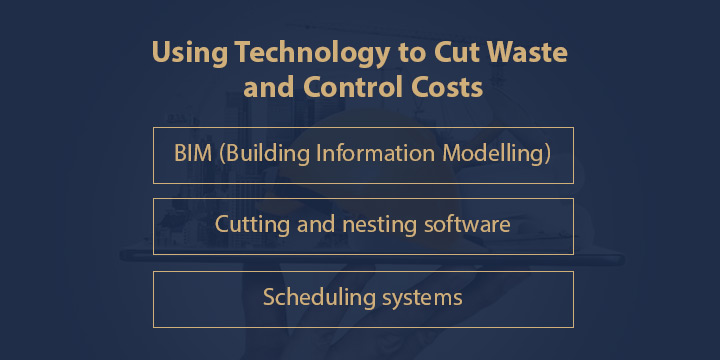
These tools reduce the hidden costs of waste and labour, giving builders tighter control over discount home materials and overall project budgets.
Sustainability That Saves Money
Eco-friendly doesn’t have to mean expensive. In fact, many affordable building materials for homes are also sustainable, delivering both environmental and financial benefits. In Australia, choosing sustainable products can also improve property ratings and unlock rebates.
| Material | Initial Cost | Long-Term Saving | Extra Advantage |
| Fly Ash Concrete | Slightly higher | Less cracking & repairs | Diverts waste from landfill |
| Recycled Aggregates | Lower | Up to 70% less maintenance | Carbon curing improves strength |
| CLT (Cross-Laminated Timber) | Moderate | Faster construction, lighter structure | Smaller foundation costs |
By choosing sustainable low cost construction materials, builders cut both operational expenses and lifecycle costs.
The Labour-Material Connection
Even the best discount home materials can go to waste if not handled properly. Poor storage, rushed cutting, and lack of training lead to higher wastage and unexpected costs. Investing in skilled labour ensures materials are used efficiently and responsibly.
Reducing waste by even 10% on a project can translate into thousands of dollars saved. This is proof that saving money is not just about buying cheap house construction materials—it’s also about using them wisely.
Australian Regulations That Unlock Savings
Many builders see compliance with codes like NCC, NABERS, or Green Star as a burden. In reality, aligning material choices with these standards often reduces costs over time. Better insulation lowers energy bills, compliant products reduce insurance premiums, and sustainable certifications add resale value.
Factoring compliance into your material choices ensures the cost of construction materials works in your favour, rather than creating future expenses through retrofits or penalties.
Why CESOL is the Trusted Partner for Material Cost Planning
At Capstone Engineering Solutions (CESOL), we help clients look beyond just cheap building materials. With over a decade of experience, we combine lifecycle cost analysis, BIM technology, and supplier partnerships to ensure every decision leads to real savings.
Builders across Australia turn to CESOL not just for access to discount home building supplies, but for expert guidance that protects budgets and ensures compliance.
Partner With CESOL and Build Smarter
Choosing the right materials is one part of the journey. The quality of what you build with directly affects durability and value. Making the right choices early helps avoid costly mistakes later.
Planning properly is what ensures success. A clear strategy prevents delays and wasted resources. It also gives every project a solid foundation to move forward with confidence.
Effective planning always starts with accurate cost estimation — understanding material, labour, and equipment costs upfront helps avoid budget blowouts and ensures long-term savings.
CESOL partners with homeowners, contractors, and developers to secure cost effective building materials while providing the insight needed to reduce risks and long-term costs. Our team works closely with clients to understand their goals and challenges. By combining practical solutions with industry knowledge, we deliver results that save both time and money.
For smarter building strategies that cut costs without cutting quality, partner with CESOL and build with confidence.
Conclusion: Build Smart, Save More
Chasing the lowest price rarely delivers genuine savings. Real value comes from selecting affordable building materials for homes, using smart supply strategies, and applying technology for accuracy. By planning around compliance and sustainability, Australian builders can reduce the cost of construction materials while building stronger, more efficient homes.
With CESOL’s expertise, building smarter—not cheaper—becomes the pathway to true cost savings.
FAQs on Saving Money with Building Supplies
The most popular ones are bamboo, recycled steel, fly ash concrete, and engineered timber. They are cheap but powerful enough to use in the long-term.
Cooperate with reliable distributors of construction materials, compare various suppliers, and never forget to check the adherence to the Australian standards.
Recycled aggregates, durable roofing, and quality insulation can be the most cost-effective and efficient.
Yes. Sustainable alternatives lower maintenance and energy costs in the long term and most are eligible to receive rebates or compliance benefits.
CESOL is a blend of industry, supplier knowledge and compliance support, so you can be sure you are getting discount home building supplies that will provide real lifecycle savings.