
Accurate estimating is critical to the mission of construction. An experienced construction estimator can avoid budgetary overrun, make accurate bids and make a solid base towards the success of the project. Provided the cost estimates are inaccurate, the owners and contractors experience delays, cash-flow problems, and even lost bids.
This guide is aimed at the contractors, clients, and project owners who wish to employ the best construction estimators, know what tools they operate with, and know how to estimate construction costs confidently.
Knowing the Roles and Types of Estimators in Construction Projects.
A construction estimator in the construction industry has a duty of reviewing plans, estimating costs in materials, labor, and equipment and giving advice on budgets to the stakeholders.
Key roles include:
- Cost Analyst – specializes in cost tracking and variance analysis.
- Chief Estimator – leads teams for large, complex projects.
- Estimator Firm / Construction Estimating Services – outsourced partners offering full estimating solutions.
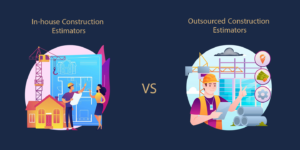
In-house vs Outsourced Construction Estimators
Many large companies keep an in-house building estimator, while smaller contractors or one-time developers often rely on construction cost estimating services for their flexibility and scalability.
Specializations
- Commercial Construction Estimator – handles complex bids for offices, malls, and infrastructure.
- Home Construction Estimator or House Construction Cost Estimator – focuses on residential projects.
- Specialists in MEP, electrical, civil, concrete estimating — ideal for niche project needs.
When to hire vs outsource:
- Hire in-house if you have frequent ongoing projects.
- Outsource to top construction estimating services or best construction estimating companies if you need flexibility or access to broader expertise.
What it Takes to Have a Highly Skilled and Reliable Construction Estimator
Potential practitioners are encouraged to take accreditation training as a formal construction estimator or as a quantity surveying or construction management degree or certification to acquire credibility. An effective construction estimator is one who combines technical, analytical and communication abilities:
Core Technical Skills
- Analytical skills in blueprint reading and quantity takeoff.
- Proficiency in historical data and cost database usage.
- Familiarity with the best construction estimating software for speed and accuracy.
Key Soft Skills
- Risk assessment and contingency planning.
- Clear communication and collaboration across teams.
- Problem-solving, adaptability, and time management.
Experience in specific project types—residential, commercial, or industrial—adds significant value.
Pursuing formal construction estimator education or certifications (like quantity surveying or construction management degrees) enhances credibility.
How do you estimate construction costs?
Follow a structured process—define scope, measure quantities, apply current unit rates, add indirects, risk, and markup—then sanity-check against past projects.
A Quick Step-by-step process:
- Define scope & assumptions – drawings/specs, site constraints, schedule, quality level, procurement plan.
- Quantity takeoff – measure materials, labor hours, and equipment needs from plans/BIM.
- Price direct costs
- Materials: supplier quotes + wastage.
- Labor: crew productivity × hours × local wage rates.
- Equipment/plant: own vs rental, mobilization, fuel.
- Subcontractors: get at least 2–3 comparable quotes.
- Add indirects/soft costs – permits, insurance, bonds, temp works, supervision, site facilities, testing, utilities.
- Risk & contingency – typically 5–15% (higher for early design or complex sites).
- Escalation & currency – index for expected price inflation over the project timeline.
- Overhead & profit – company OH (e.g., 8–12%) + target margin.
- Taxes/duties – VAT/sales tax, import duties if applicable.
- Cross-checks – bottom-up vs parametric ($/sf, $/m², $/LF) vs analogous (similar past jobs).
- Sensitivity review – test best/likely/worst cases for volatile items (steel, concrete, MEP).
- Document & version – date, basis of estimate, inclusions/exclusions, clarifications.
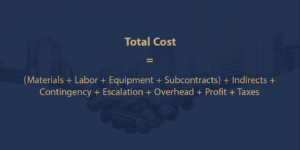
Simple formula:
Total Cost = (Materials + Labor + Equipment + Subcontracts) + Indirects + Contingency + Escalation + Overhead + Profit + Taxes
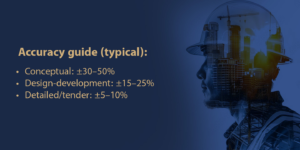
Accuracy guide (typical):
- Conceptual: ±30–50%
- Design-development: ±15–25%
- Detailed/tender: ±5–10%
Tools that help: digital takeoff + cost databases, scheduling links (for labor/equipment time), and a disciplined change-log.
Common mistakes to avoid: vague scope, missing quantities, outdated rates, zero/low contingency, ignoring logistics/phasing, and poor version control.
Deliverables to include: priced BoQ/takeoff, assumptions, contingency rationale, vendor quotes, and a one-page executive summary with range and key risks.
“Win Bids. Control Costs. Deliver On Time.”
CESOL uses industry-trusted tools (CostX/Buildsoft/Cubit) and audited cost data to keep your budgets precise from day one.
[Book a Free 15-Minute Call »]
How Much Does It Cost? Compensation & Pricing Benchmarks.
A construction cost estimator needs to know about the common payment models:
- Hourly/ Day Rates: It is common with freelancers or specialized consultants.
- Fixed-Price Packages: This is common to well established services of construction cost estimating.
- Retainer Agreements: For developers managing multiple projects or contractors with regular needs.
Average Ranges
- A junior home construction estimator may charge less than an experienced commercial construction estimator.
- Salary benchmarks for full-time roles range widely depending on region and project complexity.
Incentives can be tied to accuracy and project savings.
A transparent fee structure from the best construction cost estimator ensures clarity and reduces surprises.
Comparison of Estimator Types & Pricing
| Estimator Type | Typical Projects | Average Cost Range (USD) | Best Suited For |
| Commercial Construction Estimator | Offices, malls, infrastructure | $75 – $150 / hr | Large-scale developers & contractors |
| Home Construction Estimator | Houses, remodels, renovations | $50 – $100 / hr | Homeowners, residential builders |
| Building Estimator | All structural & material scopes | $60 – $120 / hr | General contractors, design-build firms |
| Outsourced Estimating Services | Multi-project & seasonal support | Project-based packages | Contractors needing flexible expertise |
Tip: While high-end fees may seem expensive, experienced estimators often save more by preventing cost overruns.
Step-by-Step Guide to Hiring the Right Construction Estimator
Hiring the right construction estimator or selecting among the best construction estimating companies involves:
- Defining Scope & Job Description – decide whether you need a building estimator, a home building cost estimator, or an outsourced partner.
- Sourcing Candidates – via industry referrals, job boards, or specialized recruiters.
- Screening Resumes – prioritize experience with similar project types and proficiency in leading construction estimating software.
- Interviewing & Assessment – ask about methods, give a test or sample estimating task.
- Reference Checks & Portfolio Review – evaluate past work for accuracy and reliability.
- Onboarding & Training – align them with your internal workflows and communication channels.
Evaluating Outsourced Construction Estimating Services
When outsourcing to construction estimating services, look for:
- Proven track record and strong portfolio.
- High level of detail in takeoffs and cost breakdowns.
- Transparent pricing and sample estimates.
- Clear communication and regular reporting.
- Robust contingency planning and risk management.
- Up-to-date use of the best construction estimating software and cost databases.
Use a standardized Request for Proposal (RFP) template and a side-by-side comparison checklist to make data-driven decisions.
How Modern Tools & Methods Improve Estimation Accuracy
Modern construction estimator workflows rely on digital tools:
- Best Construction Estimating Software: PlanSwift, ProEst, STACK, Sage Estimating, etc.
- Methodologies: bottom-up, parametric, analogous, hybrid approaches.
- Cost Databases: RSMeans, regional supplier data, market indices.
- Integrations: BIM for accurate takeoffs, scheduling software for progress tracking.
- Emerging Tech: AI and machine learning for predictive costing; drones for data collection.
Investing in advanced tools boosts productivity and reduces human error.
Common Challenges and Pitfalls and How to Avoid Them
Even the experienced construction estimators have difficulties. Common pitfalls include:
- Underestimating contingencies or ignoring risk factors.
- Not being able to make regional or seasonal price adjustments.
- This is due to poor communication that has resulted in miscommunication on drawings.
- Bigger scope increases without increased budget.
- No version control/documentation.
These problems are prevented by regular audits and workflows between estimator, designer and contractor.
Real-World Case Studies – Lessons from Success and Mistakes
Case Study 1 – Commercial Project Savings
A contractor who hired a seasoned commercial construction estimator reduced unexpected cost overruns by 18% through better supplier negotiations.
Case Study 2 – Residential Accuracy Boost
A homeowner worked with a reliable home construction estimator and a reputable home building cost estimator, which kept their project within budget despite fluctuating lumber prices.
Case Study 3 – Pitfalls of Inexperienced Hiring
A small builder who skipped professional construction estimating services faced a 22% budget overrun due to missed scope items.
Accurate forecasting by a skilled construction estimator or trusted construction cost estimating services is essential for project success. Contact Cesol today!
Conclusion – Invest in Expertise for Long-Term Success
You need a building estimator, a home construction estimator, or a commercial construction estimator, investing in experience will be rewarded by less risk, lower bids and easier implementations. After the organized recruitment process, apply the latest tools and collaborate with the top construction estimating firms to have guaranteed budgets and steady project completion.
“Stop Guessing. Start Building With Confidence.”
Our certified estimators deliver audit-ready takeoffs and defensible budgets for residential and commercial projects across the world.
Get Your Cost Estimate » visit our website now!
FAQs
Q: What is the difference between an estimator in the construction industry and quantity surveyor?
A: Estimators are concerned with the initial cost prediction, quantity surveyors are usually maintained in the whole project so as to control and regulate the costs.
Q: Will I hire an estimator on a full time basis or opt to outsource to construction estimating services?
A: Full-time personnel is appropriate in companies where there is high frequency of projects; outsourcing is appropriate in one-time or seasonal cases.
Q: How often should estimates be updated?
A: At key design milestones and whenever material or labor markets shift.
Q: What’s the acceptable error margin in estimates?
A: The estimator in construction is Typically ±5-10% for detailed estimates, wider for early conceptual ones.
Q: How to handle change orders and re-estimates?
A: Have clear processes, communicate promptly, and use updated data from your building estimator or service provider.