
In the current business marketplace, the ability to win the right contracts has meant the difference between success and failure within an organization. However, bidding can be a complicated process as it is often characterized by numerous documents, strict compliance rules, and short deadlines. An improperly managed tender process would result in the loss of opportunities, risk of non-compliance, and unnecessarily high costs. That is where a tender management system can come in. Automation of the tendering process allows organizations across a range of industries, from construction companies to tenders at project management consultancies, to gain more time, lessen mistakes, and bolster their bidding according to the experts by over 50 percent.
This Tender Management System guide will answer the following questions that come to your mind.
What is Tender Management System?
At its core, tender management is the structured process of creating, issuing, evaluating, and awarding tenders. It’s more than just paperwork—it’s about ensuring transparency, compliance, and fairness in procurement.
A tender in project management typically involves two major stakeholders:
- The buyer (organization issuing the tender) – often in industries like construction project management tenders, fleet management tenders, or government procurement tenders.
- The supplier or contractor (bidding organization) – companies that respond to tenders, usually with detailed proposals, pricing, and compliance documents.
It’s important to distinguish tendering from other procurement terms:
- Tender – The official request for proposals or quotations.
- Bid – The supplier’s response to the tender.
- Proposal – The detailed documentation that supports the bid.
Together, these elements form the foundation of the tender management process.
The Step by Step Tender Management Guide
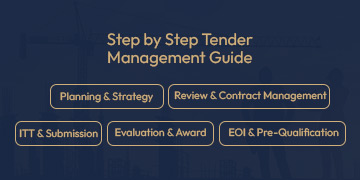
A successful project management tender process requires structure and clarity. Here’s how it typically unfolds:
1. Initial Planning and Strategy
Before releasing a tender, buyers must conduct market research, assess risks, and define requirements. For example, in construction management tenders, early planning ensures scope, timelines, and compliance needs are clear. This stage also includes:
- Drafting tender documents.
- Establishing evaluation criteria.
- Ensuring alignment with compliance and contract regulations.
2. Expression of Interest & Pre-Qualification
Often, organizations issue an Expression of Interest (EOI) or Pre-Qualification Questionnaire (PQQ). This helps shortlist capable suppliers before sending out a formal Invitation to Tender (ITT). In industries like fleet maintenance tenders or project management consultancy tenders, this step ensures only qualified suppliers move forward.
3. Invitation to Tender (ITT) & Submission
Once shortlisted, suppliers receive an ITT. Here, bid teams prepare responses—a critical part of bid process management. Suppliers decide whether to pursue (Go/No-Go decision), assign internal responsibilities, and align with win themes. Tools like an online tender management system make collaboration faster and more efficient.
4. Evaluation and Award
The buyer evaluates bids against predefined criteria such as price, compliance, quality, and innovation. Advanced procure tender management systems often support automated scoring and document comparison, reducing human error and bias.
5. Post-Tender Review & Contract Management
Once a supplier is selected, the contract begins. At this stage, tender & contract management ensures obligations are met. Buyers and suppliers also review performance to improve future processes. In complex areas such as risk management tender processes, continuous monitoring is essential to avoid disputes and delays.
Common Challenges in Tender Management
Despite being a structured process, tender handling is often filled with challenges, especially when using manual methods:
- Documentation chaos – Multiple stakeholders create duplication, lost files, and version control issues.
- Compliance risks – Missing details in contract management tender and its process can result in disqualification.
- Time pressure – Without automation, organizations waste valuable hours on repetitive tasks.
- Lack of strategy – Many companies chase every opportunity, instead of focusing on the right tenders in bid & tender management.
These challenges highlight the need for digital solutions such as an e tender management system.
Benefits of Using a Tender Management System
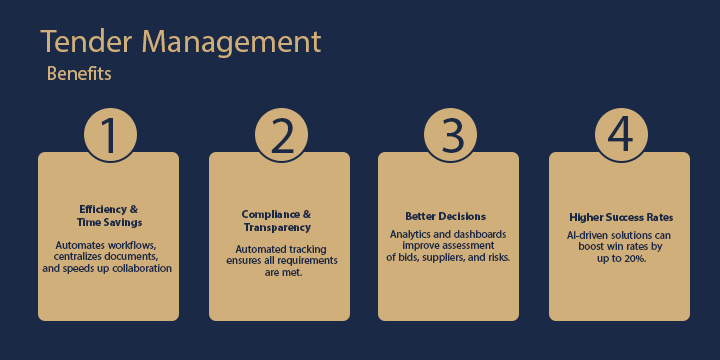
Organizations adopting a modern tender management company solution see significant improvements:
- Efficiency & Time Savings:
An online tender management system reduces manual effort by automating workflows, storing documents centrally, and enabling faster collaboration. - Improved Compliance & Transparency:
Whether it’s procure plus tender management system or AI-driven bid management consultancy tools, automated tracking ensures all requirements are met. - Better Decision-Making:
With analytics, dashboards, and reporting, decision-makers can quickly assess bid competitiveness, supplier performance, and overall risks. - Higher Success Rates:
Organizations using AI-driven bid process management solutions report up to a 20% increase in win rates.
In short, adopting a tender management system isn’t just a convenience—it’s a competitive advantage.
Key Features to Look for in a Tender Management System
When selecting a tender management company platform, ensure it supports both buyers and suppliers. Look for:
- Centralized Document Management – Keep all project files, contracts, and submissions in one place.
- Bid and Proposal Collaboration Tools – Essential for bid management consultancy teams handling multiple stakeholders.
- Automation – From deadline reminders to compliance checks.
- Integration – With CRMs, project management tools, and finance software.
- Analytics & Dashboards – Track KPIs like bid-to-win ratios, supplier performance, and risks.
- AI Assistance – Many modern platforms in bid & tender management now use AI to draft responses, highlight compliance gaps, and optimize win themes.
Quick Look at Leading Tender Management Solutions
Different organizations require different levels of functionality. A few notable solutions include:
- Softhealer – Offers customizable modules for tender handling and bid and tender management.
- Visure Solutions – Strong in compliance-heavy industries, with robust requirements management.
- Responsive – AI-driven platform designed for bid teams, enabling faster content creation and improved win rates.
- ProQsmart – Focused on procurement efficiency with tools for supplier relationship management and analytics.
These systems highlight how the tender management process is evolving from manual spreadsheets to powerful digital ecosystems.
Best Practices for Effective Tender Management
To maximize success, organizations should follow proven strategies:
- Focus on the Right Tenders:
Instead of chasing every opportunity, prioritize high-value project management tenders and those aligned with core strengths. - Standardize and Reuse Content:
Templates in an e tender management system save time while ensuring consistency across responses. - Engage Stakeholders Early:
In complex construction project management tenders, early involvement reduces risks and ensures stronger proposals. - Prioritize Risk Management:
Whether it’s fleet management tenders or construction management tenders, proactive risk management in tendering process reduces costly mistakes. - Review and Learn:
Post-tender reviews allow organizations to refine strategies, strengthen compliance, and continuously improve win rates.
Conclusion
Tender management has ceased being just an exercise of issuing tenders and waiting to receive responses. It is a strategic process and it demands planning, teamwork work and the necessary technology. From contract management, tender, and the tender process to fleet maintenance tenders, the landscape is rapidly evolving, and parties still using manual processes may find it difficult to keep up.
Implementation of a modern tender management system will allow organizations to have more organized way of managing tenders and have a better rate of compliance and therefore bagging more projects. Using the right tools, businesses are able to bid on project management tenders, construction management tenders and even highly complicated risk management tenders without hesitation.
The future of tender & contract management lies in automation, analytics, and AI. Now is the time to transform your tender handling into a competitive advantage. Visit our website today for best tender management services.
FAQs
1. What is a Tender Management System and why is it important?
A Tender Management System is a digital solution that helps organizations create, manage, evaluate, and award tenders efficiently. It ensures compliance, transparency, and reduces errors, ultimately improving the chances of winning bids.
2. How does an online tender management system benefit organizations?
An online tender management system streamlines workflows, centralizes documents, automates compliance checks, and provides analytics for better decision-making. This leads to faster processes, cost savings, and higher bid success rates.
3. What are the key steps in the tender management process?
The process typically includes planning and strategy, issuing expressions of interest or pre-qualification, invitation to tender (ITT) and submissions, evaluation and award, and post-tender contract management.
4. What challenges do companies face without a tender management system?
Manual processes often result in lost documents, compliance risks, missed deadlines, duplication of work, and lack of strategy, making it difficult to win tenders and manage contracts effectively.
5. What features should I look for in a tender management solution?
The best systems include centralized document management, bid collaboration tools, workflow automation, CRM/project integration, analytics dashboards, and AI-powered assistance to optimize the bidding process.